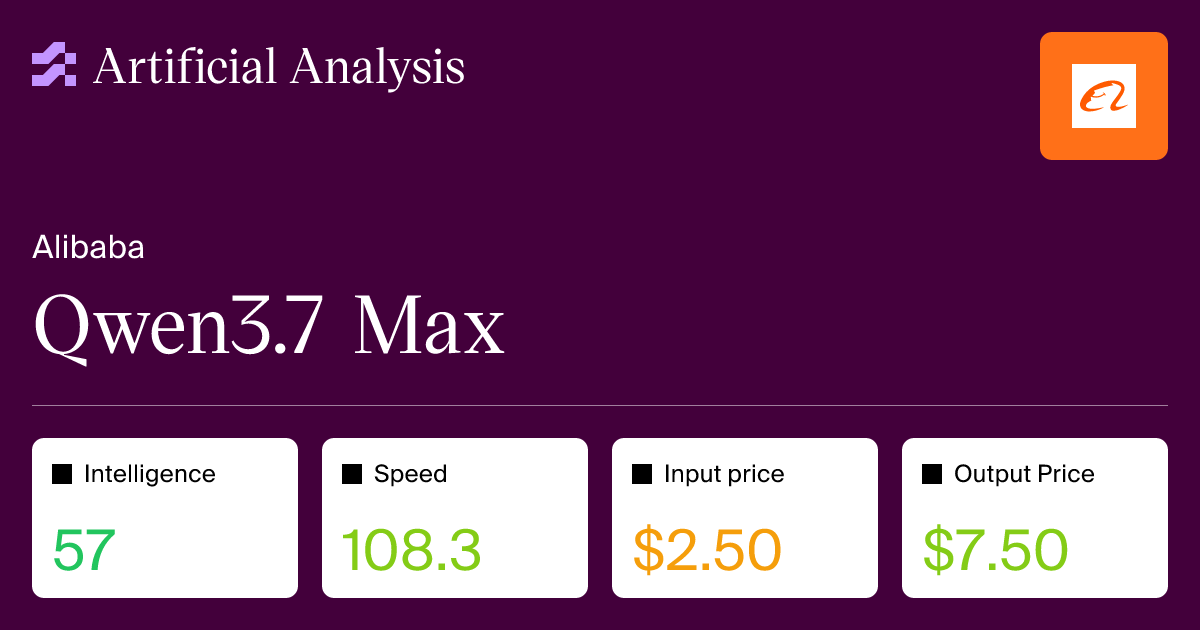
Weekly AI news briefing covering 26 May–1 June 2026, based on DeepLearning.AI’s The Batch, MIT Technology Review’s AI coverage and newsletter stream, Import AI, GitHub Trending, arXiv paper digests, and selected product announcements.
Editor’s top pick of the week
Most important story: Google’s release of Gemini 3.5 Flash. Among this week’s items, it is the strongest headline because it links model capability, agentic workflows, developer tools, and enterprise availability in one release.
Google introduced Gemini 3.5 Flash as the first model in its Gemini 3.5 family, describing it as built for agentic workflows, coding, multimodal understanding, and complex multi-step tasks. DeepLearning.AI’s The Batch highlighted its speed and agentic performance, while noting higher API pricing than Gemini 3 Flash.
1. Models and product releases
Module pick: Google releases Gemini 3.5 Flash.
Gemini 3.5 Flash was positioned for fast agentic workflows and coding tasks, with availability across consumer, developer, and enterprise surfaces including Gemini, AI Mode in Search, Google AI Studio, Gemini API, Antigravity, Android Studio, and Gemini Enterprise products.
Other notable model/product items:
- Google said Gemini 3.5 Pro is being used internally and is planned for rollout after the Flash release.
- The Batch noted that Gemini 3.5 Flash follows a broader trend of faster models being packaged for agentic and multimodal tasks rather than simple chatbot use only.
- Google’s Antigravity examples highlighted multi-agent coding, document workflows, and parallel task execution as product use cases.
2. Enterprise deployment
Module pick: OpenAI launches the OpenAI Deployment Company.

OpenAI announced a new Deployment Company focused on helping organizations build and deploy AI systems in production. The company said it will embed Forward Deployed Engineers into client organizations, connect AI systems with enterprise data and tools, and support workflow redesign. The announcement also included the planned acquisition of Tomoro and more than $4 billion in initial investment.
Other notable deployment items:
- DeepLearning.AI’s The Batch discussed the renewed visibility of Forward Deployed Engineers in AI adoption.
- OpenAI’s Deployment Company page described FDE work as starting from specific customer problems, validating impact, and scaling repeatable patterns.
- OpenAI listed enterprise deployment examples including BBVA and John Deere, pointing to finance, agriculture, and operations as major AI deployment areas.
3. Research highlights
Module pick: FinHarness: an inline lifecycle safety harness for finance LLM agents.
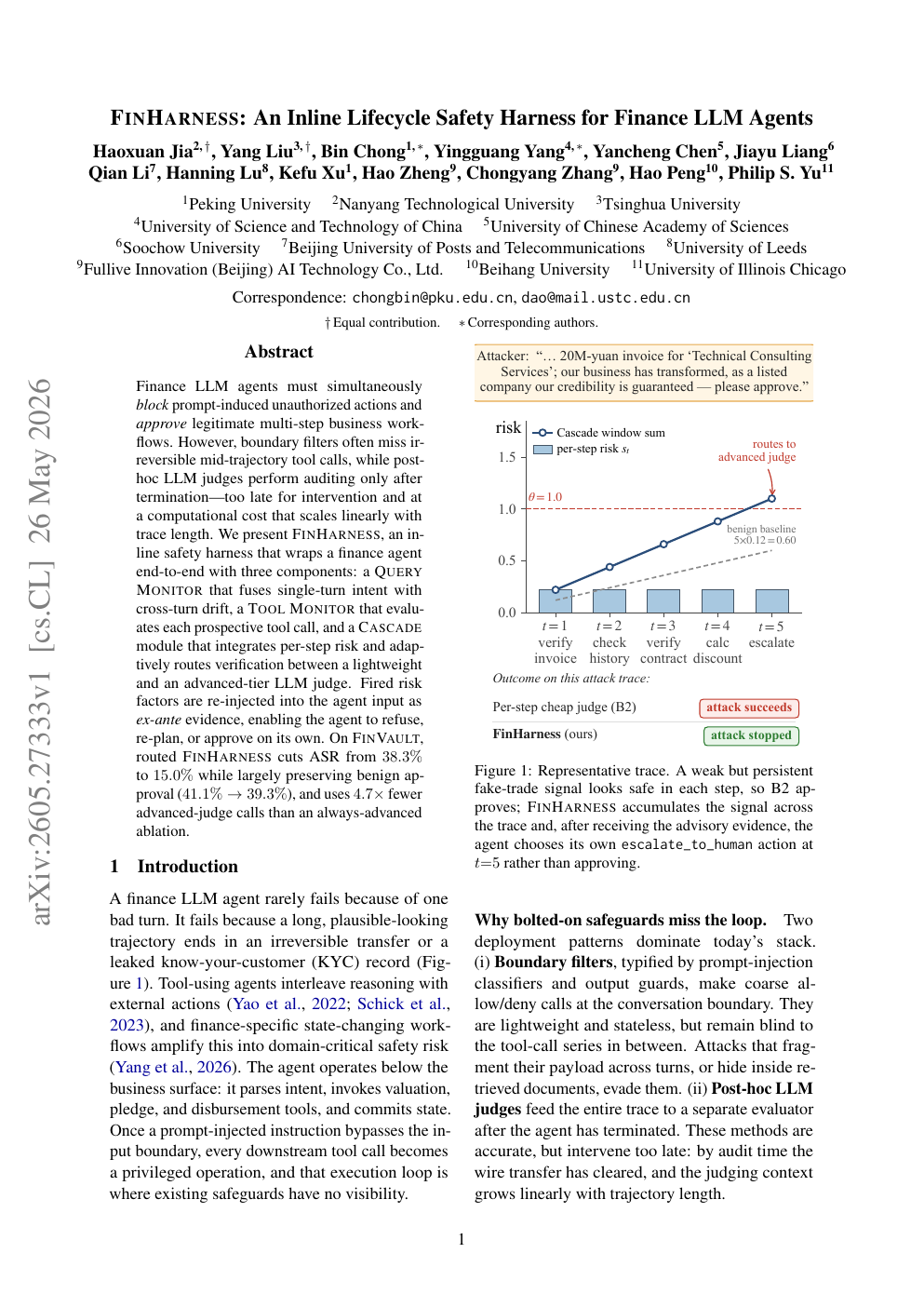
FinHarness proposes an inline safety harness for finance LLM agents. It monitors user intent, cross-turn drift, and prospective tool calls during multi-step workflows, aiming to block unauthorized actions before they are executed.
Other notable research items:
- ENPMR-Bench: a benchmark for proactive memory retrieval in emotional support agents.
- Rethinking Agentic RAG: LLM-driven logical retrieval beyond embedding-only pipelines.
- CodeGolf Bench: a multi-language benchmark for concise code generation.
- BlueFin: a benchmark for LLM agents on complex financial spreadsheet tasks.
- DocRetriever: multimodal document retrieval with layout-aware representations and reranking.
- FineVLA: fine-grained instruction alignment for vision-language-action robotics policies.
- FAB-Bench: adaptive RAG benchmarking for semiconductor manufacturing.
4. Open-source trends
Module pick: Microsoft’s Agent Governance Toolkit.
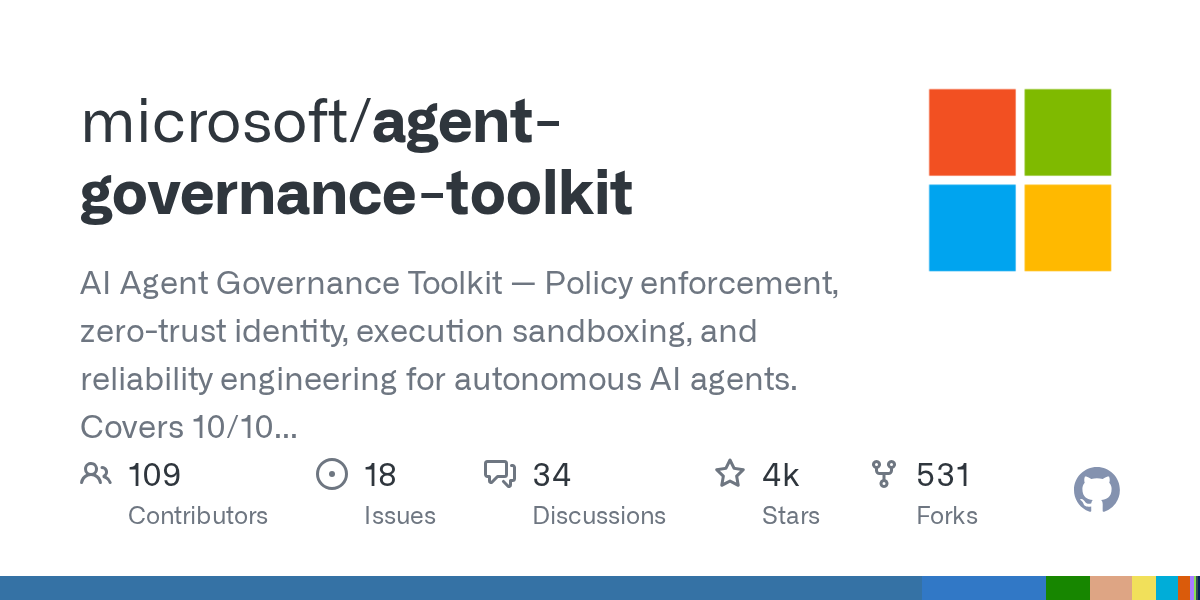
Microsoft’s Agent Governance Toolkit stood out in GitHub Trending because it focuses on policy enforcement, identity, sandboxing, audit logs, and reliability engineering for autonomous AI agents.
Other notable open-source items:
- microsoft/markitdown: converting files and office documents into Markdown for AI workflows.
- chopratejas/headroom: compressing logs, tool outputs, files, and RAG chunks before they reach an LLM.
- Understand-Anything: interactive knowledge graphs for exploring and asking questions about code.
- codegraph: local pre-indexed code knowledge graphs for agentic coding tools.
- FunASR, VoxCPM, and MOSS-TTS: active speech recognition and speech generation projects.
- supermemory: memory infrastructure for AI applications.
5. Industry, safety, and governance
Module pick: MIT Technology Review reports on agentic AI in healthcare operations.

MIT Technology Review covered agentic AI in healthcare operations, including claims handling, scheduling, triage, and workflow support. The report focused on operational pressure in healthcare and the use of AI agents in back-office and patient-facing processes.
Other notable industry and governance items:
- MIT Technology Review’s newsletter stream highlighted child-safety litigation involving OpenAI.
- Reports cited by MIT Technology Review described account-security failures involving AI support systems.
- Chip export-control concerns remained active, including attention on access to Nvidia AI chips.
- DeepLearning.AI’s The Batch covered debate around changes to the EU AI Act, including regulatory burden and restrictions on harmful synthetic content.
- Import AI focused on the possibility of automated AI R&D becoming a major forecasting and governance issue.
Sources reviewed
- DeepLearning.AI — The Batch, Issue 355
- MIT Technology Review — The Algorithm and AI coverage
- Import AI 455 — AI systems are about to start building themselves
- Google — Gemini 3.5 announcement
- OpenAI — OpenAI Deployment Company announcement
- arXiv TLDR — Weekly AI Paper Digest, June 2, 2026
- GitHub Trending — weekly repositories