This weekly briefing covers AI developments reported or released between June 16 and June 22, 2026, drawing first on DeepLearning.AI’s The Batch, MIT Technology Review’s The Algorithm and AI coverage, and Import AI, with checks against official release pages, benchmark sites, GitHub, and arXiv.
Models / Product Releases
Module pick: Subquadratic published new evidence for its sparse-attention SubQ model
MIT Technology Review reported that Subquadratic has released more information about SubQ, a model the startup says uses sparse attention to reduce the cost of long-context inference. The company says SubQ can handle up to 12 million tokens and that third-party testing by Appen found strong long-context retrieval results. The report also notes that access remains limited and that outside researchers remain cautious about broader claims that the quadratic attention bottleneck has been solved.

Other notable items
- NVIDIA Nemotron 3 Ultra: DeepLearning.AI’s The Batch highlighted NVIDIA’s 550B-total, 55B-active Mixture-of-Experts model. NVIDIA’s research page says the release includes pretrained, post-trained, and quantized checkpoints plus training datasets.
- Claude Fable 5 testing: The Batch reported that independent evaluators had difficulty interpreting Claude Fable 5 benchmark results because protective policies and fallback behavior could change what model or refusal behavior was being tested.
Enterprise Deployment
Module pick: NVIDIA positioned Nemotron 3 Ultra for high-throughput agent workflows
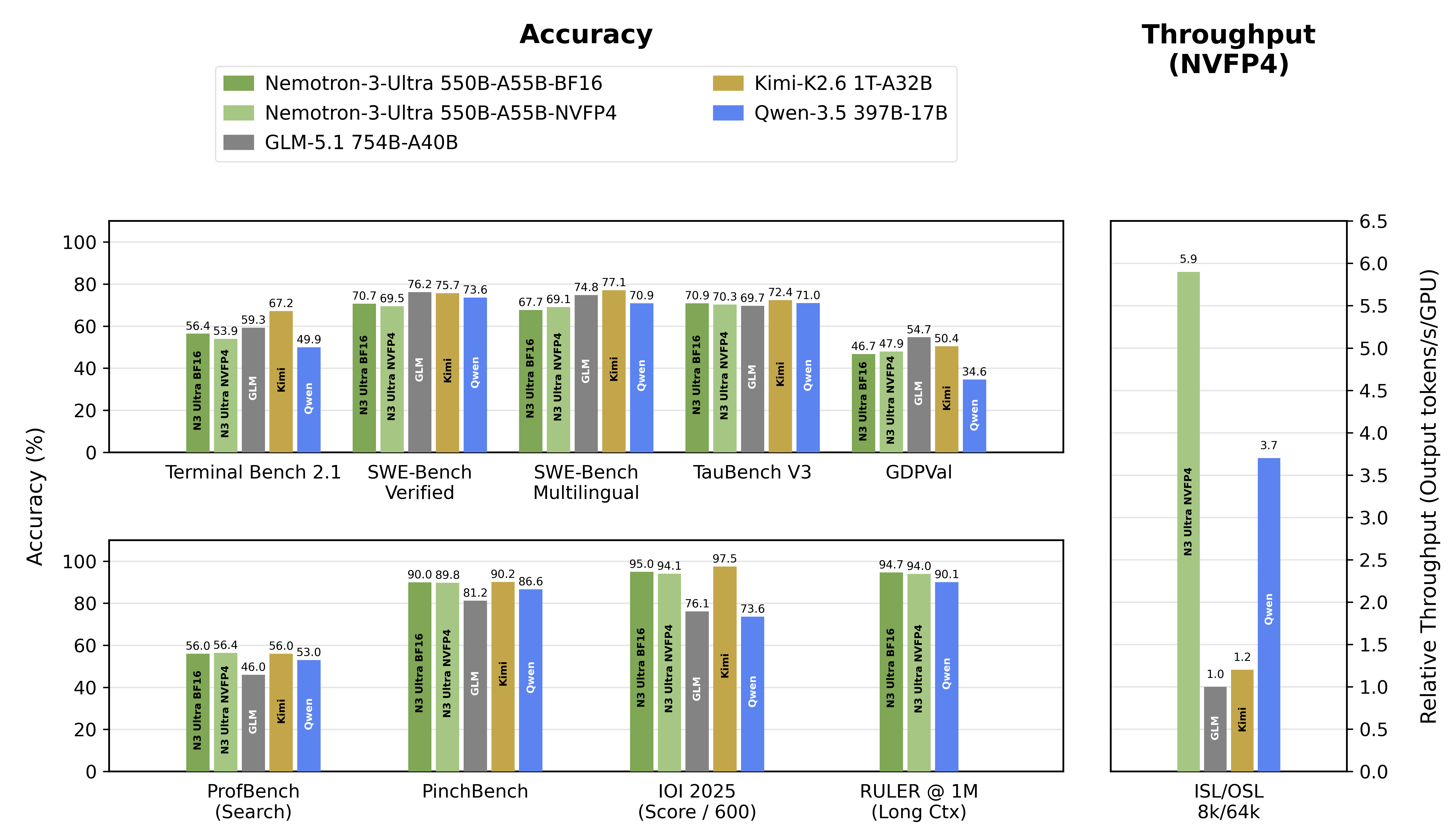
NVIDIA describes Nemotron 3 Ultra as optimized for long-running agent workloads, combining a hybrid Mamba-attention architecture, LatentMoE, speculative decoding support, and inference-time reasoning-budget control. The official release reports up to 1M-token context support and higher inference throughput than several large open models in NVIDIA’s 8k-input / 64k-output setting.
Other notable items
- SubQ enterprise waitlist: MIT Technology Review reported that Subquadratic says more than 500 enterprise customers have signed up for early access, though the model is not yet broadly available for independent use.
- Federal AI cybersecurity access: A June U.S. executive order calls for frameworks that could give selected agencies and critical-infrastructure operators access to covered frontier models for cyber defense under confidentiality and security requirements.
Research Highlights
Module pick: POPE uses partial solution hints to improve reinforcement learning on hard reasoning tasks
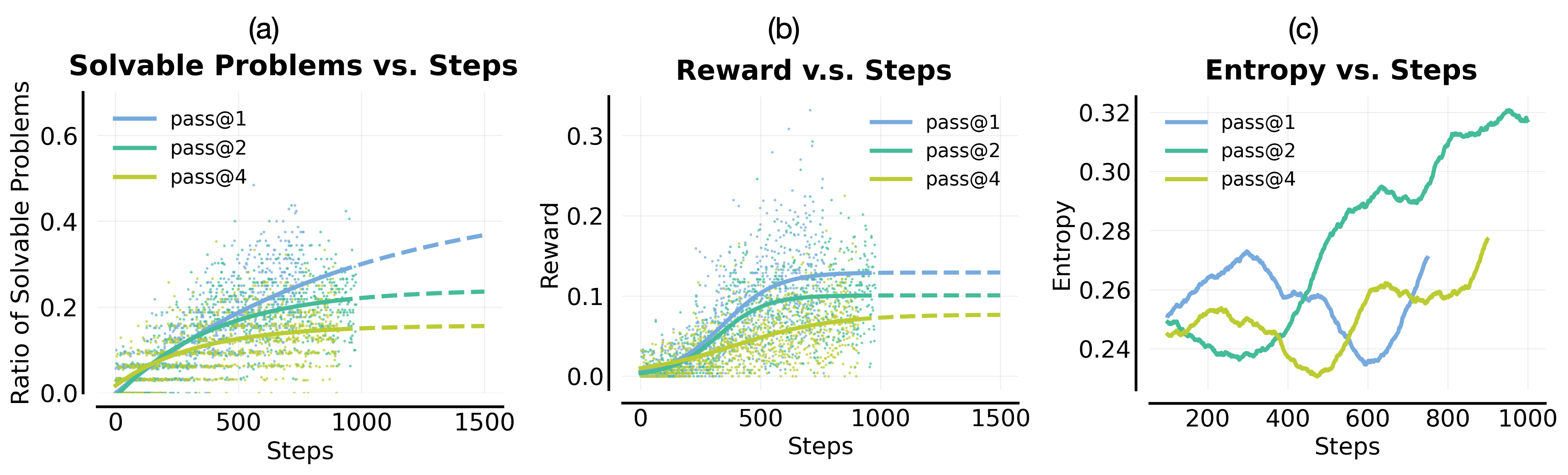
DeepLearning.AI’s The Batch covered Privileged On-Policy Exploration, or POPE, a method from Carnegie Mellon researchers that gives reinforcement learning systems partial solution prefixes for hard problems. The arXiv paper argues that these guided rollouts help models obtain non-zero reward signals on problems that ordinary on-policy RL often fails to explore.
Other notable items
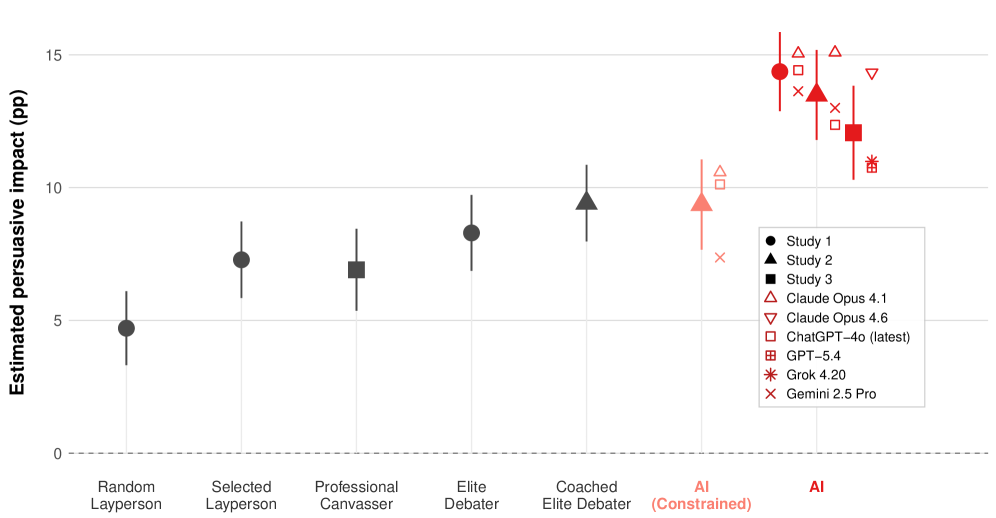
- AI persuasion study: Import AI summarized an Oxford, UK AI Security Institute, Stanford, and LSE paper reporting that frontier AI systems out-persuaded expert humans across preregistered text-conversation experiments.
- From AGI to ASI: Import AI covered a Google DeepMind paper that maps possible transitions from AGI to ASI, including scaling, algorithmic shifts, recursive improvement, and large-scale multi-agent collectives.
- Recursive automated research: Recursive published early results from an automated AI research system on small-model training, training-speed, and GPU-kernel optimization benchmarks, with artifacts released for inspection.
Open-source Trends
Module pick: DeepSWE adds a harder public benchmark for long-horizon coding agents
The Batch reported that DeepSWE, ProgramBench, and ITBench-AA are part of a shift beyond SWE-bench-style bug-fix evaluation. DeepSWE’s public leaderboard, updated June 20, lists 113 tasks across 91 repositories and five languages, with tasks written from scratch to reduce contamination and verifiers designed to check software behavior rather than implementation details.
Other notable items
- Nemotron open checkpoints: NVIDIA released Nemotron 3 Ultra checkpoints on Hugging Face, including NVFP4, BF16, base, and reward-model variants, along with several training-data collections.
- Recursive artifacts: Recursive says it is open-sourcing artifacts from its automated AI research runs, including outputs related to NanoChat Autoresearch, NanoGPT Speedrun, and SOL-ExecBench.
Industry / Safety / Governance
Module pick: New evidence suggests AI systems can outperform expert humans in text persuasion
Import AI highlighted an arXiv paper titled “AI systems out-persuade expert humans.” The authors report four preregistered experiments involving 18,978 conversations from 6,923 people, finding that AI systems were reliably more persuasive than expert humans and nearly three times more effective than professional canvassers at raising real-money donations in one study. The paper frames this as a governance-relevant capability because persuasion systems can affect political communication and public-interest campaigns.
Other notable items
- Frontier-model access policy: The U.S. executive order on advanced AI innovation and security describes a voluntary framework for covered frontier model access, pre-release government assessment, and trusted partner selection.
- Anthropic access restrictions: The Batch discussed the broader ecosystem impact of U.S. government and Anthropic actions that restricted access to frontier models over the previous two weeks.
- Self-sustaining AI timelines: Import AI covered an Asterisk interview on whether AI systems could eventually sustain their own physical infrastructure, with humanoid robotics and tacit manufacturing knowledge identified as central uncertainties.
Selected sources
- DeepLearning.AI, The Batch, June 19, 2026: “Testing Mythos and Fable, Moving Beyond SWE-bench, Nvidia’s Open Contender,” plus related articles on Nemotron 3 Ultra, POPE, agentic benchmarks, and Claude Fable testing.
- MIT Technology Review, June 19, 2026: “A startup claims it broke through a bottleneck that’s holding back LLMs.”
- Import AI 462, June 22, 2026: “Superpersuasion; self-sustaining AI; paths to ASI.”
- Official and primary checks: NVIDIA Research Nemotron 3 Ultra page, DeepSWE benchmark site, Recursive’s automated research post and GitHub artifacts, arXiv papers 2601.18779, 2606.16475, and 2606.12683, and the White House executive order on advanced AI innovation and security.