This weekly briefing covers AI developments reported or released between June 23 and June 29, 2026, drawing on Import AI, MIT Technology Review’s The Algorithm and AI coverage, DeepLearning.AI’s The Batch archive, and checks against official release pages, research sites, Hugging Face, arXiv, and product blogs.
Models / Product Releases
Module pick: Google Finance added AI portfolio tools and scheduled market briefings
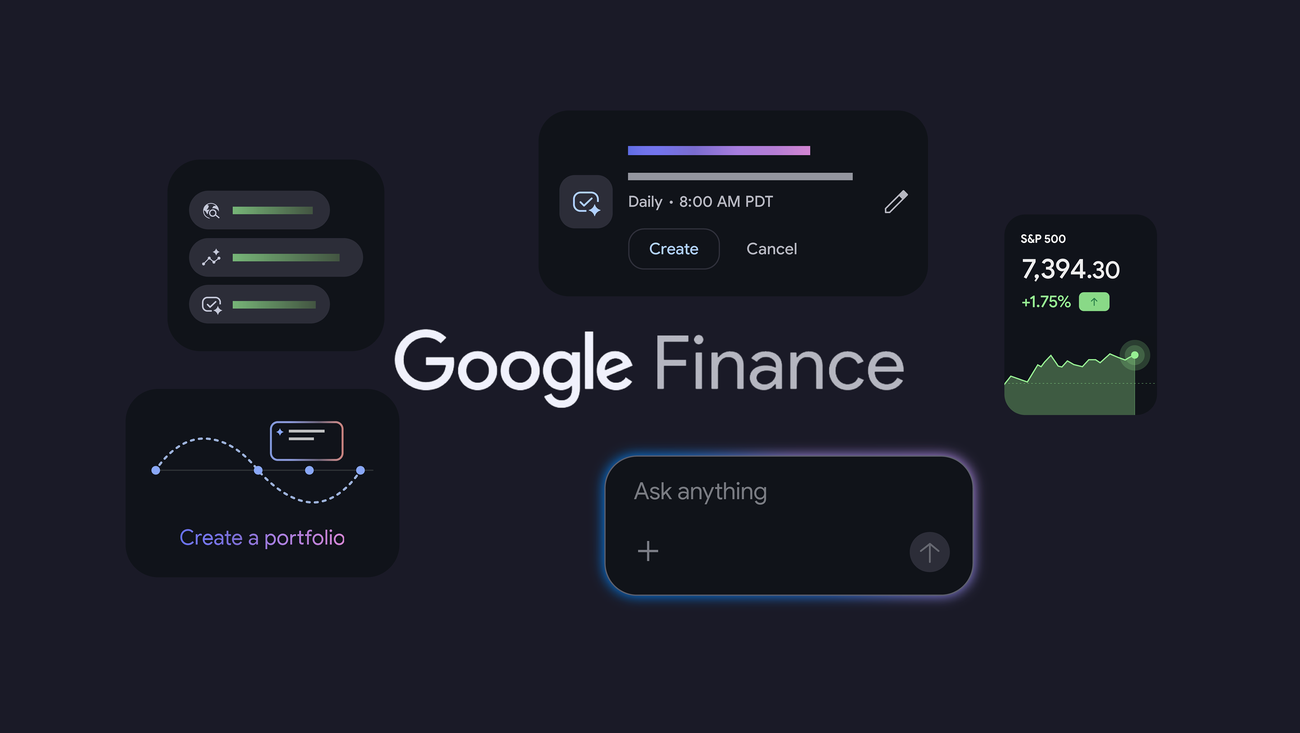
Google said the new Google Finance is coming out of beta with portfolio dashboards, AI-assisted investment research, scheduled market-intelligence briefings, and a dedicated Android app. The release says users can create portfolios from uploaded files, screenshots, or natural-language descriptions, then ask research questions against their holdings.
Other notable items
- OpenAI GPT-5.6 Sol preview: OpenAI previewed GPT-5.6 Sol, Terra, and Luna for selected trusted partners, describing Sol as its strongest model so far, with improved coding, biology, and cybersecurity evaluations plus a phased safety review process.
- OpenAI and Broadcom inference chip: OpenAI’s June 24 release announced Jalapeño, an LLM-optimized inference chip developed with Broadcom to improve performance, efficiency, and deployment scale.
- Google full-stack AI explainer: Google published an AI infrastructure explainer on its full-stack approach, covering the relationship between hardware, models, products, and developer tools.
Enterprise Deployment
Module pick: MIT Technology Review Insights reported growing enterprise confidence in agentic AI for technical workflows
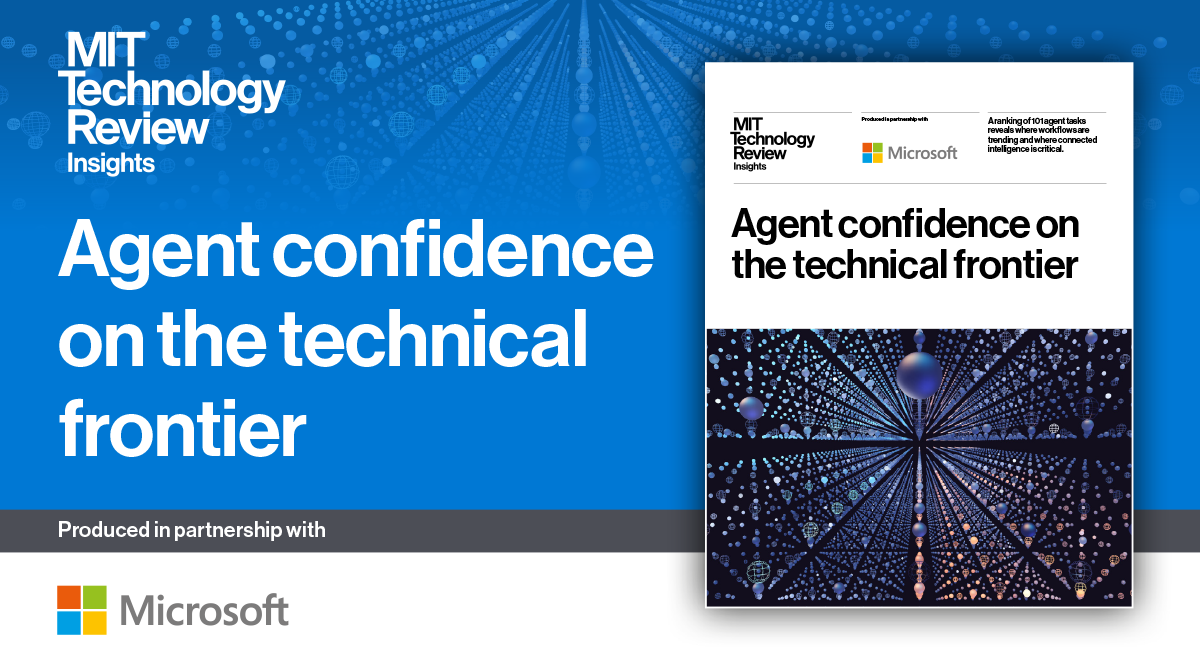
MIT Technology Review Insights published a Microsoft-sponsored report based on a survey of 300 global technology experts. The report says respondents showed high confidence in agents for measurable technical tasks such as report generation, process streamlining, data-quality monitoring, and code-related workflows, while noting that business context and human oversight remain constraints for more complex work.
Other notable items
- HP and OpenAI Frontier: OpenAI said HP is scaling a Frontier strategic partnership across customer-facing experiences, telemetry insights, employee productivity, software development, and security workflows after earlier pilots.
- OpenAI work-transformation research: OpenAI published a report on how agents are changing longer and more complex workplace tasks across roles.
- Google Finance background tasks: Google’s scheduled market-briefing feature is another example of AI tools moving from chat-style interaction into persistent background workflows.
Research Highlights
Module pick: NVIDIA, CMU, and UC Berkeley introduced ENPIRE for agentic robot policy self-improvement
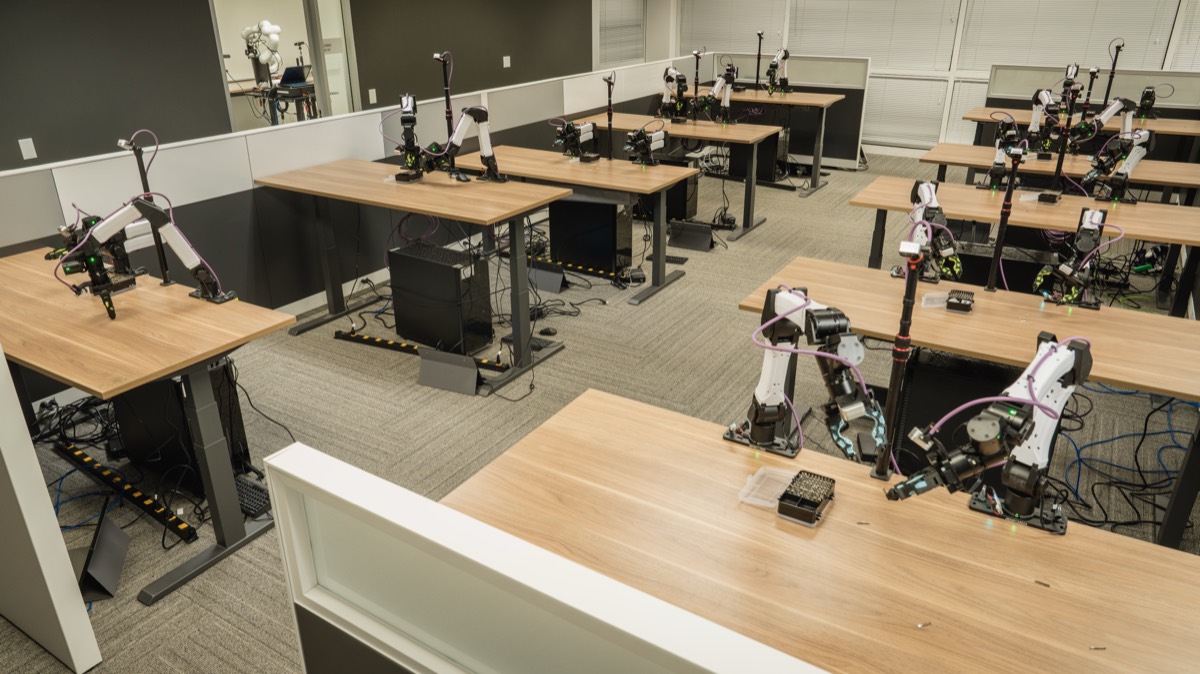
Import AI highlighted ENPIRE, a research system from NVIDIA, CMU, and UC Berkeley that applies coding-agent-style loops to real-world robotics. The project’s research page describes four components — Environment, Policy Improvement, Rollout, and Evolution — that let agents reset tasks, evaluate rollouts, refine policies, and improve manipulation behavior on physical robots. The authors report up to 99% pass@8 success on showcased dexterous manipulation tasks.
Other notable items
- Tencent ARGUS: Import AI covered Tencent’s ARGUS paper, which describes production-scale tracing and performance diagnosis for training workloads on clusters of more than 10,000 GPUs.
- Local Ordinance Corpus: Import AI also covered LOCUS, a local-ordinance dataset intended to make municipal law more usable by AI systems; the dataset is available on Hugging Face.
- DiScoFormer: Allen Institute researchers published a Hugging Face post on DiScoFormer, a transformer approach for density and score modeling across distributions.
Open-source Trends
Module pick: IBM Research released CUGA examples for building agentic apps on a lightweight harness
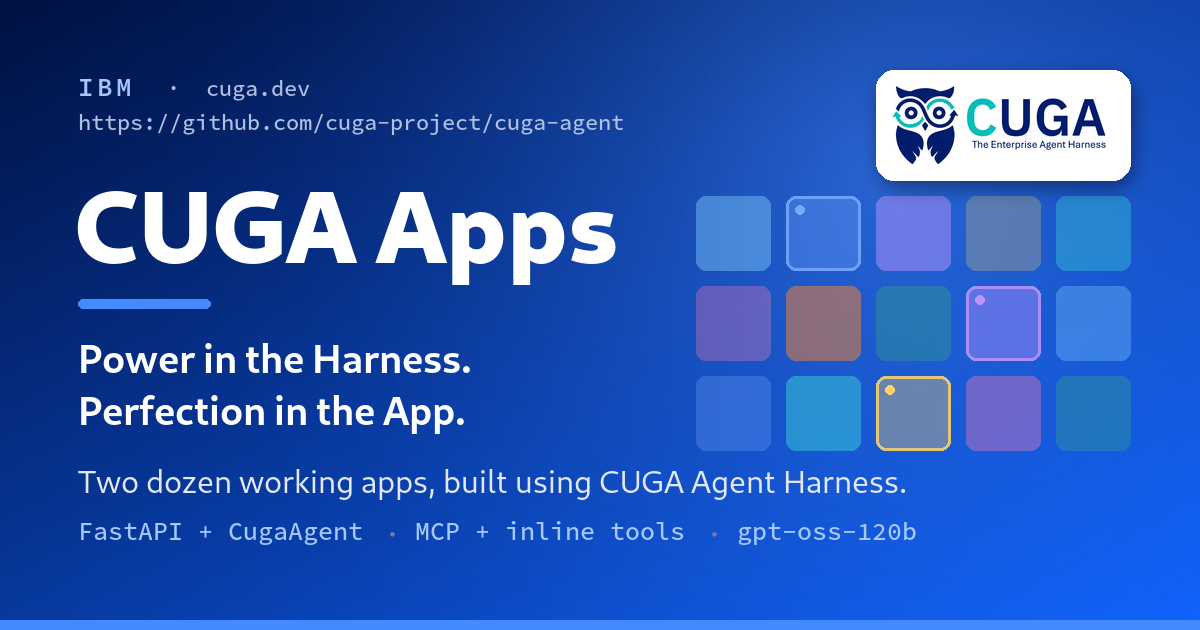
IBM Research published two dozen working examples for CUGA, an open-source Configurable Generalist Agent harness. The Hugging Face post presents CUGA as a way to reduce repeated agent plumbing — planning, tool calls, state, reflection, guardrails, and provider switching — while keeping each demo small enough to inspect and adapt.
Other notable items
- Hugging Face Jobs and vLLM: Hugging Face published a guide to running a vLLM server on HF Jobs with a single command, lowering friction for hosted open-model inference.
- NVIDIA NeMo AutoModel: NVIDIA and Hugging Face described NeMo AutoModel workflows for transformer fine-tuning.
- FFASR Leaderboard: Hugging Face introduced a real-world ASR benchmark focused on evaluating automatic speech recognition outside clean laboratory conditions.
Industry / Safety / Governance
Module pick: MIT Technology Review warned against treating AI agents as human coworkers
In The Algorithm, MIT Technology Review discussed research suggesting that workplace framing matters: managers in a Boston University study caught fewer errors when output was described as coming from an agentic “AI employee” rather than a chatbot. The article argues that agent branding can shift perceived responsibility away from human oversight even when the underlying systems remain tools.

Other notable items
- OpenAI and Appia Foundation: OpenAI said it helped found Appia, hosted by the Linux Foundation, to develop open modular specifications for AI assessment and standards evidence across the AI value chain.
- EU workforce mapping: OpenAI released a report mapping how AI could affect occupations and workflows across the European Union.
- Lessons from technology history: Import AI summarized a paper arguing that historical forecasts about transformative technologies often missed both adoption timing and downstream social consequences.
Selected sources
- Import AI 463, June 29, 2026: “Self-improving robots; a 10k Chinese GPU cluster; and an elegiac essay for the human era.”
- MIT Technology Review, The Algorithm, June 29, 2026: “AI agents are not your ‘coworkers’.”
- MIT Technology Review Insights, June 29, 2026: “Agent confidence on the technical frontier.”
- DeepLearning.AI, The Batch archive, latest public issue checked at publication time: June 19, 2026.
- Official and primary checks: OpenAI releases on GPT-5.6 Sol, HP Frontier, Jalapeño, Appia, and EU workforce mapping; Google Finance June 2026 release; NVIDIA Research ENPIRE page and arXiv 2606.19980; Tencent ARGUS arXiv 2606.20374; Hugging Face posts on CUGA, vLLM Jobs, NeMo AutoModel, FFASR, and DiScoFormer.