This weekly briefing covers AI developments in the July 7–13, 2026 reporting cycle, drawing on DeepLearning.AI’s The Batch, MIT Technology Review’s The Algorithm and AI coverage, Import AI, and cross-checks against official product pages, model cards, GitHub, Hugging Face, and arXiv.
Models / Product Releases
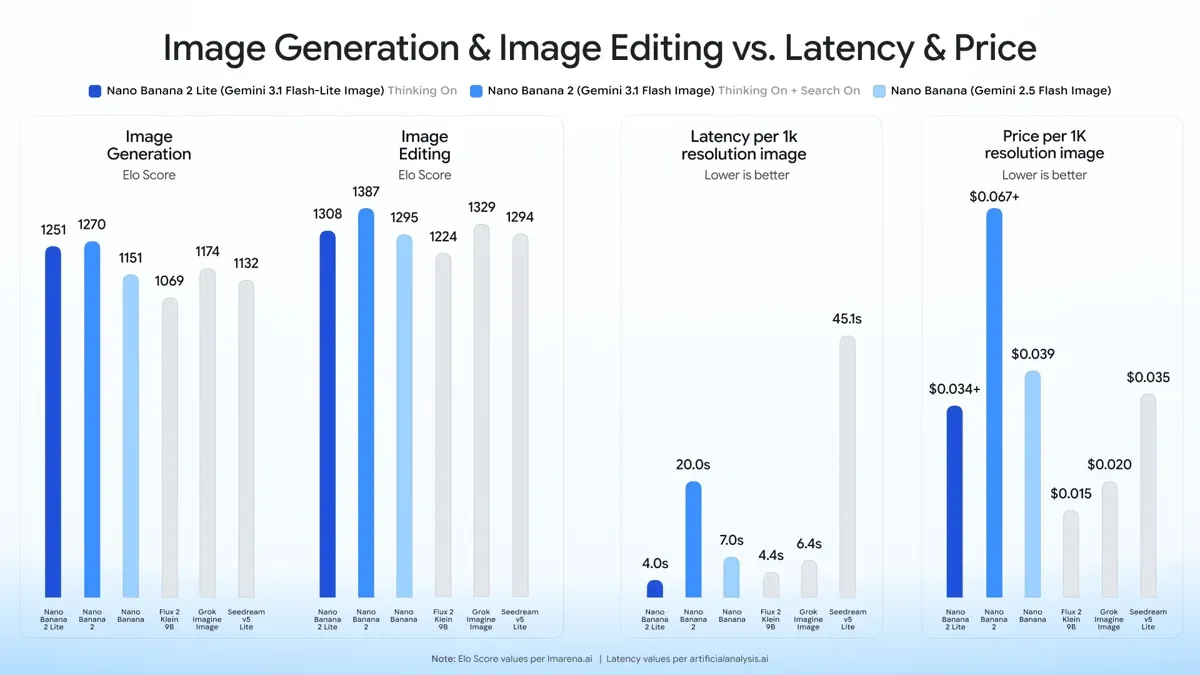
Module pick: Google paired Nano Banana 2 Lite with Gemini Omni Flash for media workflows
DeepLearning.AI’s The Batch highlighted Google’s Nano Banana 2 Lite image model and Gemini Omni Flash video model, which are designed to connect image generation, image-to-video creation, native audio, and conversational editing through Gemini tooling. Google’s model cards describe both systems as multimodal transformers, while withholding parameter counts and training-data details.
Other notable items
- GPT-5.6 general availability: OpenAI launched GPT-5.6 Sol, Terra, and Luna on July 9 across ChatGPT, Codex, and the API, with new API features including Programmatic Tool Calling, prompt-cache breakpoints, and a multi-agent beta.
- GPT-Live: OpenAI introduced GPT-Live on July 8 for lower-latency voice and multimodal interaction, accompanied by a separate deployment-safety system card.
- Model safety disclosures: OpenAI’s GPT-5.6 system card describes layered safeguards, real-time checks, monitoring, trusted-access controls, and expanded automated red-teaming before launch.
Enterprise Deployment
Module pick: Claude Fable 5 returned to API and cloud customers after export-control restrictions
Anthropic said Claude Fable 5 returned through the Claude API, Claude Code, and Anthropic-controlled platforms after export controls were lifted, with updated cybersecurity safeguards. DeepLearning.AI reported that access for AWS, Google Cloud, and Microsoft Foundry customers followed the initial redeployment, making the episode a concrete example of enterprise AI access being shaped by both product readiness and government risk controls.
Other notable items
- GPT-5.6 in Microsoft 365 Copilot: OpenAI said GPT-5.6 is now the preferred model in Microsoft 365 Copilot, extending the new family into Microsoft’s workplace assistant.
- Workplace output quality: OpenAI’s GPT-5.6 release emphasizes documents, spreadsheets, presentations, and professional workflows, including stronger template following and editable artifacts.
- Enterprise risk controls: The OpenAI and Anthropic updates both tie broader deployment to differentiated access, account controls, and additional monitoring for higher-risk cyber and biology use cases.
Research Highlights
Module pick: Brain2Qwerty v2 translated non-invasive brain recordings into text
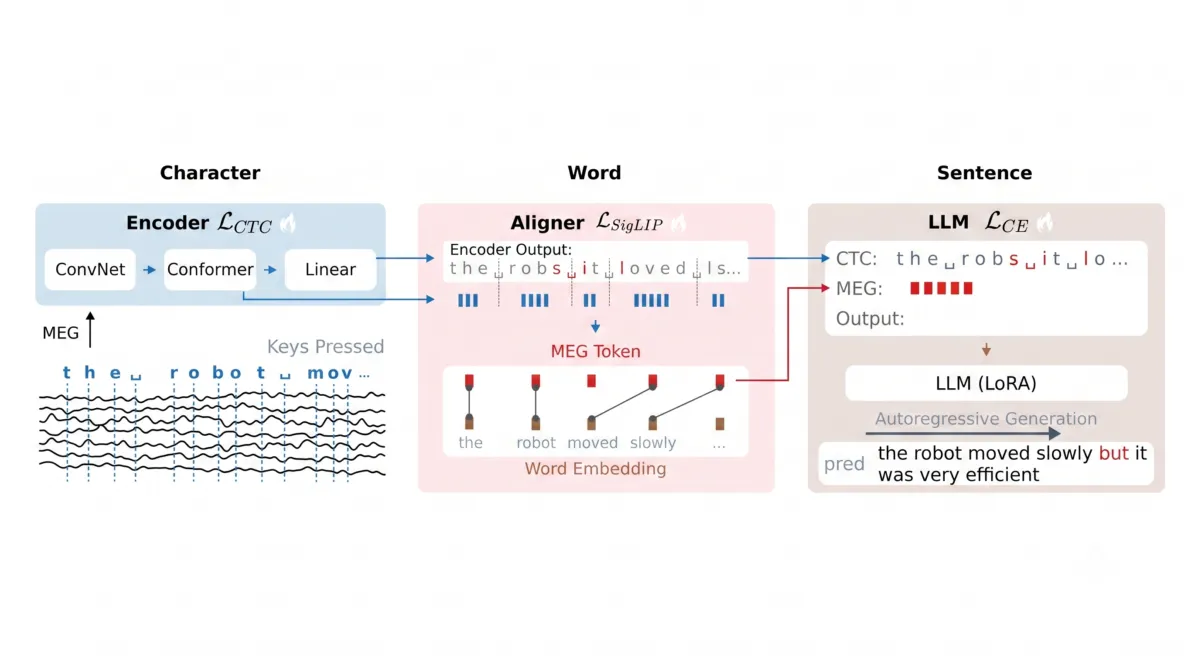
DeepLearning.AI reported on Brain2Qwerty v2, a Meta-led research effort with academic and medical collaborators that translates magnetoencephalography recordings into text. The system uses an encoder to infer character sequences from brain activity, an aligner to map character embeddings toward word embeddings, and a fine-tuned Qwen3-4B model to correct the sentence. The reported word error rate improved from 43% in the earlier version to 39%, with performance improving as training data increased.
Other notable items
- Anthropic interpretability: MIT Technology Review covered Anthropic research into a “global workspace” view of Claude’s internal processing, including tools described as J-space and J-lens for watching how features become active during reasoning.
- Coding evaluation quality: OpenAI published a research note on separating signal from noise in coding evaluations, pointing to the continued difficulty of measuring long-horizon software-agent progress reliably.
- Media-model evaluation: Google’s Gemini Omni and Nano Banana materials include human-rater comparisons and model cards, though several key details such as parameter counts and training-data specifics remain undisclosed.
Open-source Trends
Module pick: DeepSeek open sourced DSpark for faster speculative decoding
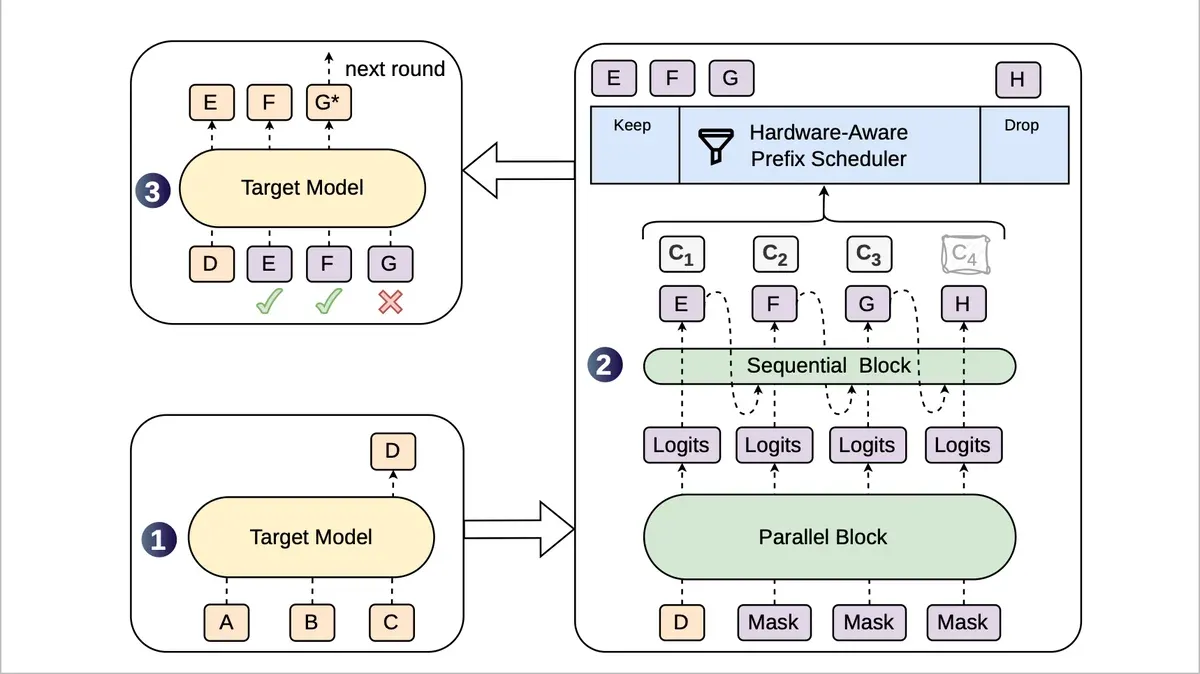
DeepLearning.AI covered DeepSeek’s DSpark, a speculative decoding method that attaches a draft module to frozen DeepSeek-V4 target models so a smaller component proposes token blocks that the larger model verifies. DeepSeek released DeepSeek-V4-Pro-DSpark and DeepSeek-V4-Flash-DSpark checkpoints on Hugging Face under a permissive MIT license. The paper reports 57% to 85% faster per-user generation in production settings for DeepSeek-V4-Pro and V4-Flash compared with the previous production drafter.
Other notable items
- Open checkpoints: DeepSeek’s Hugging Face releases add draft modules to unchanged preview weights for DeepSeek-V4-Pro and DeepSeek-V4-Flash.
- Training code context: The Brain2Qwerty team has open sourced code for the research program, with earlier data available through Hugging Face.
- Agent benchmarks: Import AI’s latest issue discussed OSWorld 2.0, KernelBench-Mega, and the Remote Labor Index as public signals for computer-use, AI R&D, and online-work automation.
Industry / Safety / Governance
Module pick: OpenAI paired GPT-5.6 with expanded deployment-safety disclosures
OpenAI published a GPT-5.6 system card alongside the model launch, describing layered safeguards for cybersecurity and biology, real-time checks, monitoring, account-level enforcement, and trusted-access controls for more sensitive defensive work. The company also announced a Bio Bug Bounty, inviting findings that can improve safeguards for biological-risk misuse.
Other notable items
- Automated red-teaming: OpenAI reported extensive human red teaming and roughly 700,000 A100e GPU hours of black-box automated red-teaming before general availability.
- Anthropic access controls: DeepLearning.AI’s The Batch reconstructed the Claude Fable 5 and Mythos 5 suspension-and-return timeline, showing how government directives and provider safeguards affected model availability.
- AI wealth-sharing debate: MIT Technology Review’s The Algorithm recently examined proposals for public stakes or broader public benefit mechanisms around AI companies, reflecting a growing policy debate over who captures AI-generated economic value.
Selected sources
- DeepLearning.AI, The Batch, Issue 361: “Restoration of Claude Fable 5, Gemini’s Video Dev Engine, DeepSeek Speeds Up Speculative Decoding.”
- DeepLearning.AI / CharonHub articles: “DeepSeek’s DSpark Gains Velocity,” “Text Without Typing,” “Google Pairs Nano Banana Update With Video API,” and “Fable’s Return and Fallout.”
- MIT Technology Review, The Algorithm newsletter and AI coverage, including reporting on AI governance and Anthropic interpretability research.
- Import AI 464: “Fable writes GPU kernels; AI automation; and analog computation.”
- Official and primary checks: OpenAI GPT-5.6 release page, GPT-Live release page, GPT-5.6 system card, GPT-5.6 Microsoft 365 Copilot update, Anthropic redeployment note, Meta Brain2Qwerty post, DeepSeek DSpark arXiv paper, and DeepSeek Hugging Face checkpoints.