This weekly briefing covers AI developments in the July 14–20, 2026 reporting cycle, drawing on DeepLearning.AI’s The Batch, MIT Technology Review’s The Algorithm and AI coverage, Import AI, and cross-checks against official product pages, research papers, GitHub repositories, and benchmark sites.
Models / Product Releases
Module pick: OpenAI rebuilt ChatGPT Voice around full-duplex GPT-Live models
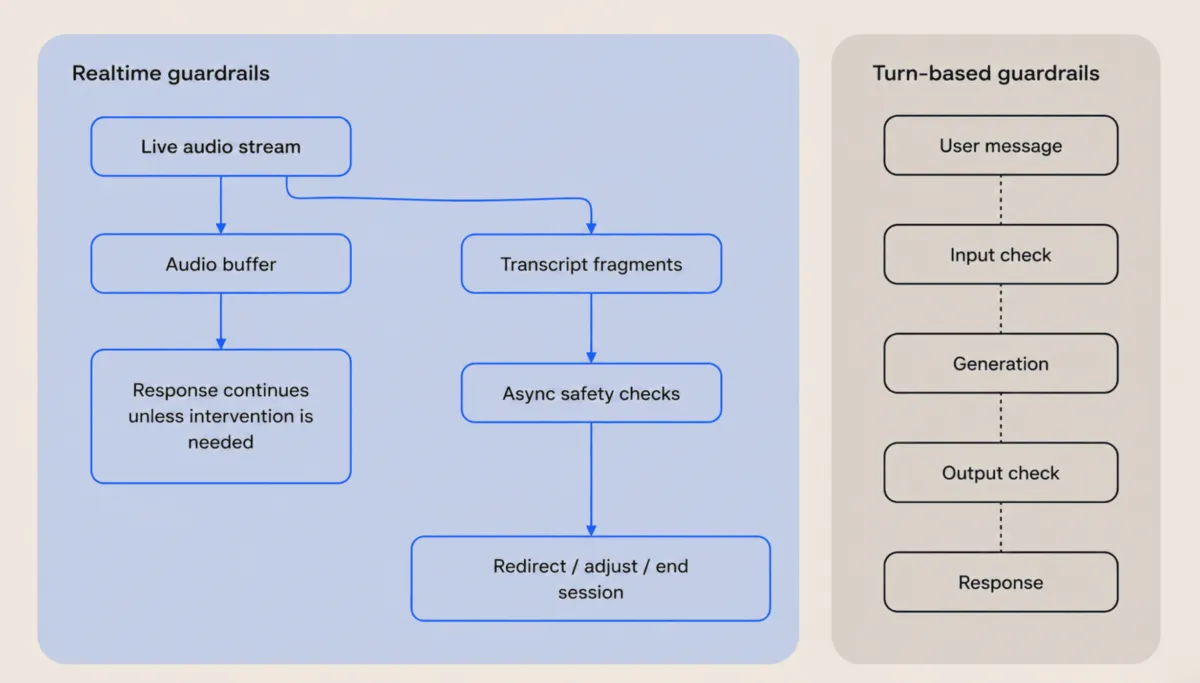
DeepLearning.AI’s The Batch reported that OpenAI released GPT-Live-1 and GPT-Live-1 mini for ChatGPT Voice on July 8. The models process incoming and outgoing audio at the same time, then route harder questions to GPT-5.5 in the background. OpenAI’s deployment-safety system card describes GPT-Live as a multi-model ensemble with real-time safety checks; DeepLearning.AI noted that a developer API for GPT-Live itself has not yet shipped.
Other notable items
- Kimi K3 debate: MIT Technology Review’s July 20 AI newsletter reported that Moonshot’s free Chinese model Kimi K3 had renewed debate in US policy circles over open-source competition, export controls, and frontier-model oversight.
- Voice interface competition: DeepLearning.AI compared GPT-Live’s design with earlier full-duplex or two-part voice systems, including Kyutai’s Moshi, Nvidia PersonaPlex, Google Gemini Live, and Alibaba Qwen2.5-Omni.
- Undisclosed details: Public coverage and OpenAI materials did not disclose GPT-Live parameter counts, training data, architecture details, or latency measurements.
Enterprise Deployment
Module pick: JD described an industrial-scale AI item-understanding system for ecommerce inventory
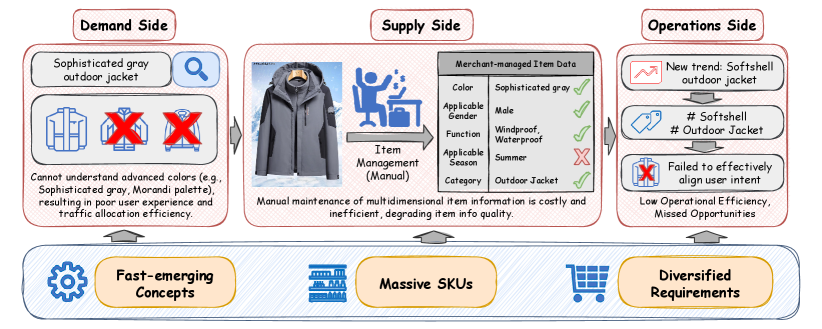
Import AI highlighted JD.com’s Oxygen AI Item Center, an LLM/VLM-centric system for item understanding, category ontology, semantic matching, and inventory-data distribution. The accompanying arXiv paper says the system covers tens of thousands of categories, processes hundreds of millions of item updates per day, and runs on Huawei Ascend NPUs. The paper frames the system as a production back-office layer rather than a standalone chatbot.
Other notable items
- Remote Labor Index update: Import AI cited a Center for AI Safety and Scale Labs update reporting that frontier agents improved from a 2.5% success rate at launch in October 2025 to 16.1% in July 2026 on end-to-end online freelance tasks.
- AI compute procurement: MIT Technology Review’s July 20 roundup cited reports that SpaceX was discussing AI compute capacity for the Pentagon, while Anthropic was reportedly exploring additional compute with Meta.
- Business-process scope: JD’s paper lists ontology construction, semantic search and discrimination, self-evolving LLM/VLM modules, and a “unified item tunnel” as core production components.
Research Highlights
Module pick: Robin used multi-agent workflows to propose drug-repurposing candidates
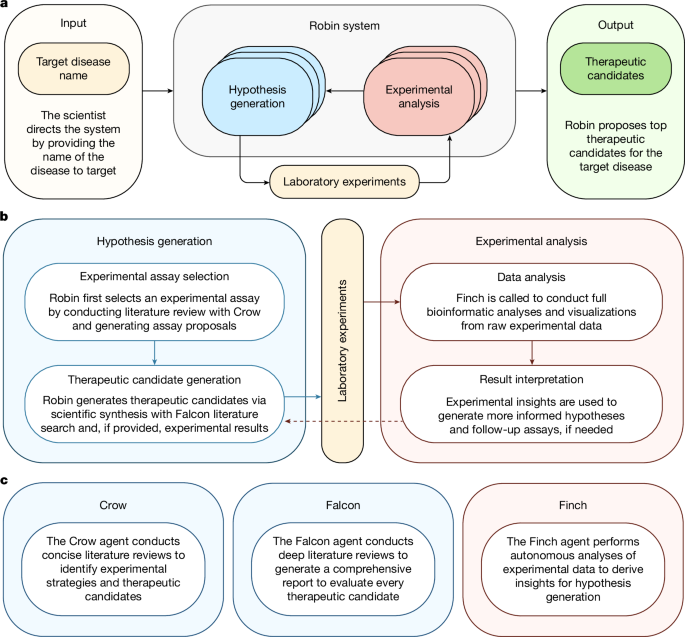
DeepLearning.AI reported on Robin, a FutureHouse-led multi-agent system published in Nature and released on GitHub. Robin searches literature, proposes disease mechanisms, designs experiments, ranks commercially available drug candidates, and analyzes lab results. In a dry age-related macular degeneration case study, the system identified Y-27632 and Ripasudil as candidates that increased RPE phagocytosis in isolated eye-cell experiments. The authors did not test the drugs in patients.
Other notable items
- Puppet benchmark: DeepLearning.AI covered MIT and Carnegie Mellon work measuring how GPT-4o conversations shifted users’ beliefs and introducing Puppet as a benchmark for estimating model influence.
- Anthropic J-space: MIT Technology Review reported on Anthropic’s Jacobian-lens work, which probes hidden model activations and surfaced internal words linked to future outputs in Claude Opus 4.6.
- Limits of current evidence: Both Robin and Puppet were framed as early research systems: Robin’s biological claims remain preclinical, while Puppet measured immediate belief shifts after a single conversation.
Open-source Trends
Module pick: OSWorld 2.0 raised the difficulty of computer-use agent benchmarks
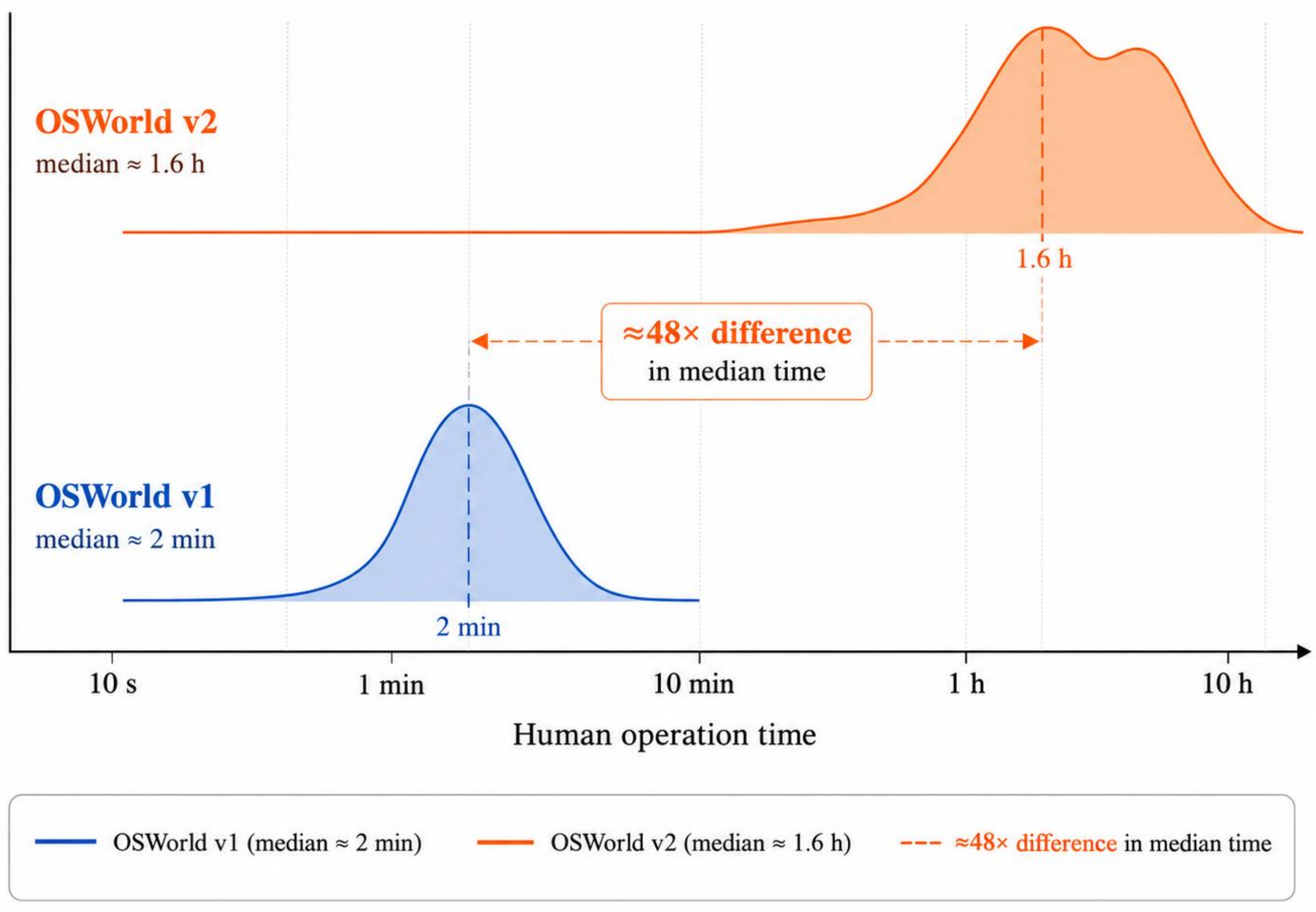
Import AI covered OSWorld 2.0, a benchmark from academic, industry, and open-source collaborators for long-horizon computer-use agents. The official benchmark site describes 108 end-to-end tasks across expanded software environments including Slack, GitLab, Overleaf, Zotero, AWS, and professional-service websites. The strongest reported setting, Claude Opus 4.8 with maximum thinking and batched tool calls, reached 20.6% binary accuracy, showing that agents still struggle with multi-hour workflows.
Other notable items
- Fable GPU kernel result: Import AI reported that Fable produced a single cooperative CUDA megakernel for KernelBench-Mega, reaching an 18.71x speedup over an optimized PyTorch baseline on an RTX PRO 6000 Blackwell system.
- Robin repository: FutureHouse released Robin under Apache 2.0, while some supporting literature-search agents remain proprietary or research-use only.
- Kimi K3 adoption pressure: MIT Technology Review reported that strong, free Chinese models are forcing US policymakers and AI companies to revisit open-weight competition and model-access controls.
Industry / Safety / Governance
Module pick: German court held Google liable for defamatory AI Overview text
DeepLearning.AI reported that the Regional Court of Munich held Google responsible for false, reputation-damaging statements generated by AI Overviews about two German publishers. DW and other coverage said the court treated the AI-generated summary as Google’s own substantive statement, issued a temporary injunction, and left Google facing potential fines if the statements continued to appear. Google reportedly plans to appeal.

Other notable items
- Model-manipulation measurement: The Puppet study found that existing manipulation detectors showed near-zero correlation with actual measured belief shifts, while LLMs had moderate success estimating changes from conversation transcripts.
- AI hiring bias: MIT Technology Review reported new research suggesting that LLM-based hiring tools can develop biases from experience and stereotype job applicants more than humans in some settings.
- Frontier-model access policy: MIT Technology Review described continued friction in the US over whether government review of frontier models amounts to necessary security oversight or a de facto licensing regime.