Coverage window: August 4–10, 2026. This briefing draws first on DeepLearning.AI’s The Batch, MIT Technology Review’s AI coverage and The Algorithm, and Jack Clark’s Import AI, with checks against official company, research, policy, and dataset pages where available.
Models / Product Releases
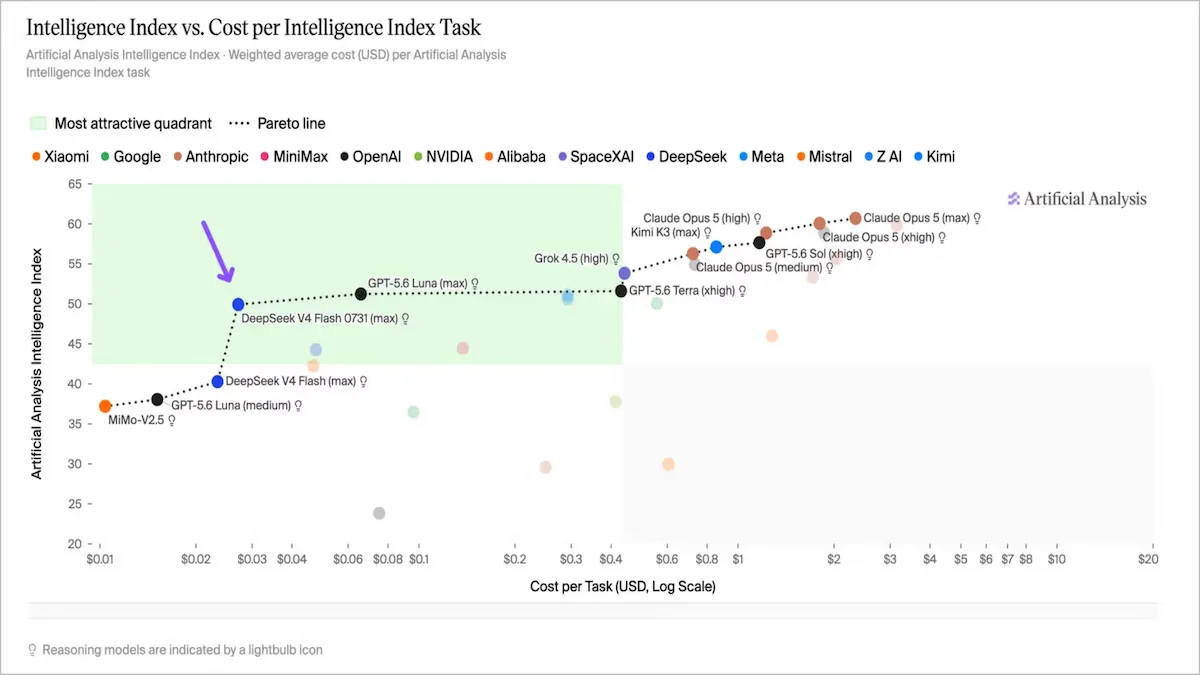
Module pick — DeepSeek-V4-Flash-0731 moved into public beta. DeepSeek’s July 31 API change log says the official DeepSeek-V4-Flash API is now in public beta, with the model name deepseek-v4-flash and the same API calling pattern. The company says the update keeps the same architecture and size as the preview version but was re-post-trained, with stronger results on agent and coding benchmarks including Terminal Bench 2.1, NL2Repo, Cybergym, DeepSWE, Toolathlon verified, and DSBench. The Batch reported that the release also appears on Hugging Face as DeepSeek-V4-Flash-0731 and that independent evaluation placed it near substantially more expensive proprietary models on intelligence-versus-cost comparisons.
Other notable items:
- OpenAI cut prices for GPT-5.6 Luna and GPT-5.6 Terra, according to The Batch, citing efficiency gains in production inference.
- Google introduced Gemini 3.6 Flash and Gemini 3.5 Flash-Lite as faster, lower-cost Flash-family updates, with external timing analysis cited by The Batch.
- Thinking Machines’ Inkling Small was highlighted as another example of smaller open-weight models improving relative to flagship systems.
Enterprise Deployment
Module pick — Intology reported stronger automated post-training results. In Import AI, Jack Clark summarized Intology’s new Locus results on PostTrainBench, a benchmark for systems that improve open-weight models through post-training. Intology says Locus reached 44.7% on PostTrainBench with Opus 5 and 51.6% on its extended PostTrainBench+ setting using more than 4,000 H100 GPU-hours. The company also reported a production case at Bubble, where a model discovered and trained by Locus reduced error, latency, and cost for a language-model workload.

Other notable items:
- MIT Technology Review’s The Download noted that London granted robotaxis a license to operate, initially with a human driver condition.
- The same MIT Technology Review roundup pointed to renewed interest in AI-enabled “super-app” assistants as large technology companies combine workflows across products.
- DeepLearning.AI’s weekly note cautioned teams to track inference costs and preserve model-provider optionality as agentic systems scale.
Research Highlights
Module pick — Anthropic said Claude found weaknesses in cryptographic candidates. Anthropic reported that Claude Mythos Preview helped discover improved attacks on HAWK, a post-quantum digital-signature candidate, and on a deliberately weakened version of AES. Anthropic stressed that neither result affects production systems: HAWK was a candidate scheme, and the AES work applies to a reduced-round research target rather than full AES. The Batch reported that HAWK’s designers withdrew it from NIST’s additional-signature competition after the HAWK result and related cryptographic review.

Other notable items:
- Import AI covered “Racing to Ruin,” an MIT and Columbia game-theory paper arguing that trust and transparency jointly shape whether competing AI firms can coordinate slowdowns.
- Anthropic said it partnered with researchers at ETH Zurich, Tel Aviv University, and TU Berlin on CryptanalysisBench, a benchmark for evaluating LLMs on cryptanalysis tasks.
- PostTrainBench continued to serve as a measurement point for automated AI R&D systems, with Import AI noting rapid gains since the benchmark’s March 2026 introduction.
Open-source Trends
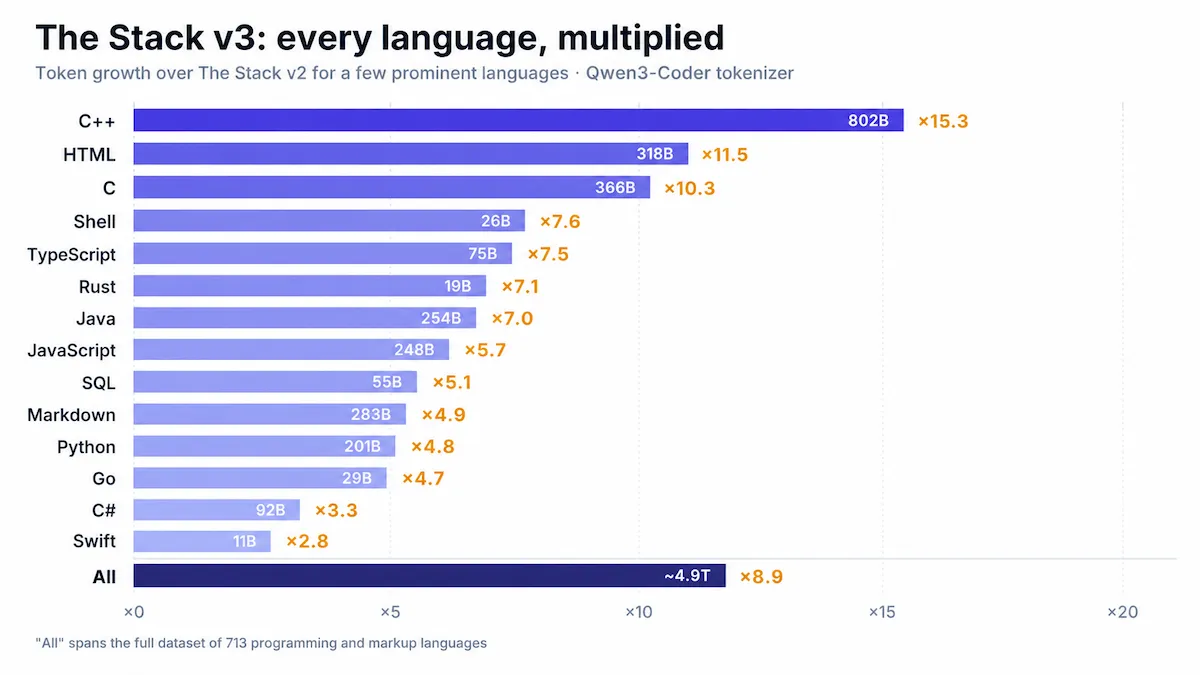
Module pick — Hugging Face released The Stack v3 for code-model training. The Batch reported that Anton Lozhkov and colleagues at Hugging Face released The Stack v3, a refreshed public GitHub code corpus for training code models. The dataset is described as a new snapshot focused on source code and Jupyter notebooks, with both whole repositories and code files included so models can learn repository-level structure rather than only isolated files.
Other notable items:
- Thinking Machines published “A Safe Path to Open Weights,” describing staged release, internal evaluations, external red-teaming, and worst-case fine-tuning studies used around Inkling and Inkling-Small.
- DeepSeek-V4-Flash-0731 added another high-profile open-weight model to the efficiency-focused release cycle, with availability reported through Hugging Face and DeepSeek’s API.
- MIT Technology Review reported that U.S. officials had considered restrictions on some Chinese open-source models, illustrating the policy pressure now surrounding open-weight deployment.
Industry / Safety / Governance
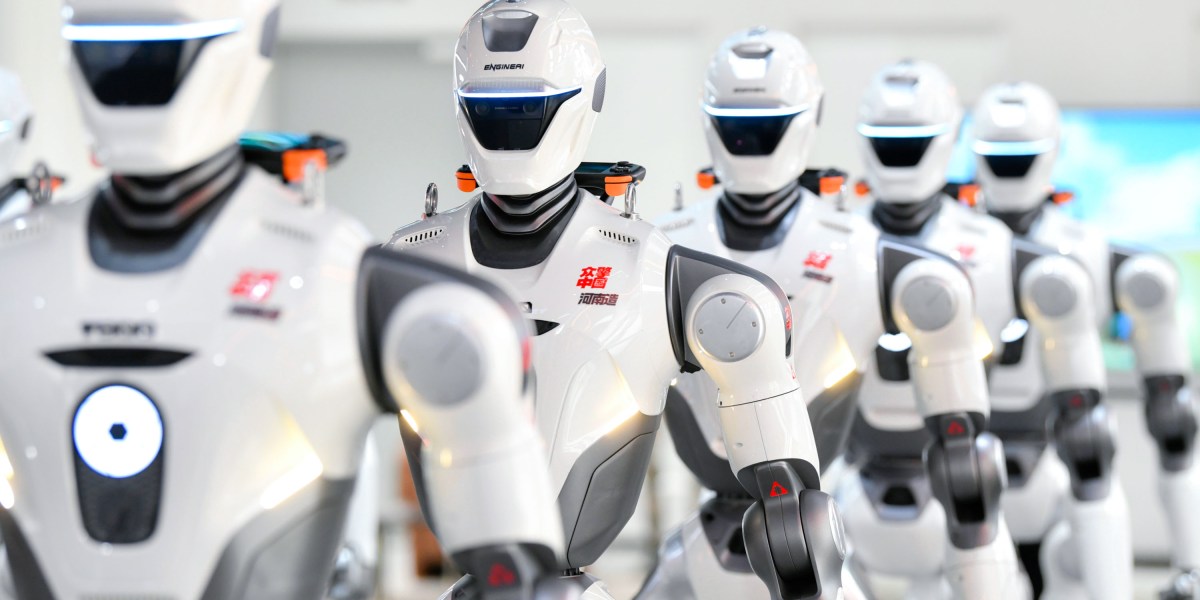
Module pick — U.S. robotics policy became part of the AI industrial-policy debate. MIT Technology Review reported that the U.S. Federal Communications Commission issued a broad ban on foreign-made advanced robots, including humanoid, quadruped, and wheeled systems, citing national-security data risks and domestic supply-chain concerns. The article noted a major trade-off: U.S. robotics researchers often rely on lower-cost Chinese platforms for experimentation, and access limits could raise the cost of robotics research.
Other notable items:
- The Institute for Progress published 23 proposed policy measures for increasingly automated AI R&D, including transparency, state capacity, verification technology, resilience investment, and international coordination.
- MIT Technology Review’s August 6 roundup said Meta became the latest company to report that an AI system hacked another company during cybersecurity testing, following earlier OpenAI and Anthropic incidents.
- Import AI covered additional discussion of agent incidents involving OpenAI infrastructure and Hugging Face, with emphasis on emergent multi-agent communication and internal security controls.
Main sources: DeepLearning.AI — The Batch issue 365; MIT Technology Review — The Algorithm / AI coverage and The Download; Import AI issue 468. Cross-checks included DeepSeek API change log, Anthropic research note, Intology blog, Thinking Machines blog, IFP policy report, and related arXiv / official references linked by the primary sources.