Coverage window: August 11–17, 2026. This briefing draws first on DeepLearning.AI’s The Batch, MIT Technology Review’s AI coverage and The Algorithm, and Jack Clark’s Import AI, with checks against official company, research, dataset, GitHub, Hugging Face, and arXiv pages where available.
Models / Product Releases
Module pick — Meta introduced Muse Code and Muse Spark 1.2. Meta AI Research released Muse Code, a beta terminal coding agent, together with Muse Spark 1.2, a coding-focused model available through Muse Code and the Meta Model API. Meta says Muse Code can plan repository-scale changes, write code, validate results, and coordinate persistent background agents. DeepLearning.AI’s The Batch highlighted the pricing split between a standard tier and a lower-cost contributor tier that permits training on prompts and outputs, making data terms a central part of the release.

Other notable items:
- Google DeepMind introduced Gemini Robotics 2, Gemini Robotics ER 2, and Gemini Robotics On-Device 2 for whole-body humanoid control, embodied reasoning, and local robotics deployment.
- DeepLearning.AI published Andrew Ng’s AI Engineering Skills Map, grouping current AI engineering work around application deployment, software fundamentals, coding agents, and shaping product specifications.
- MIT Technology Review examined startups working on post-transformer LLM designs, including sparse attention, retention-based architectures, liquid foundation models, diffusion language models, and reasoning beyond language-only generation.
Enterprise Deployment
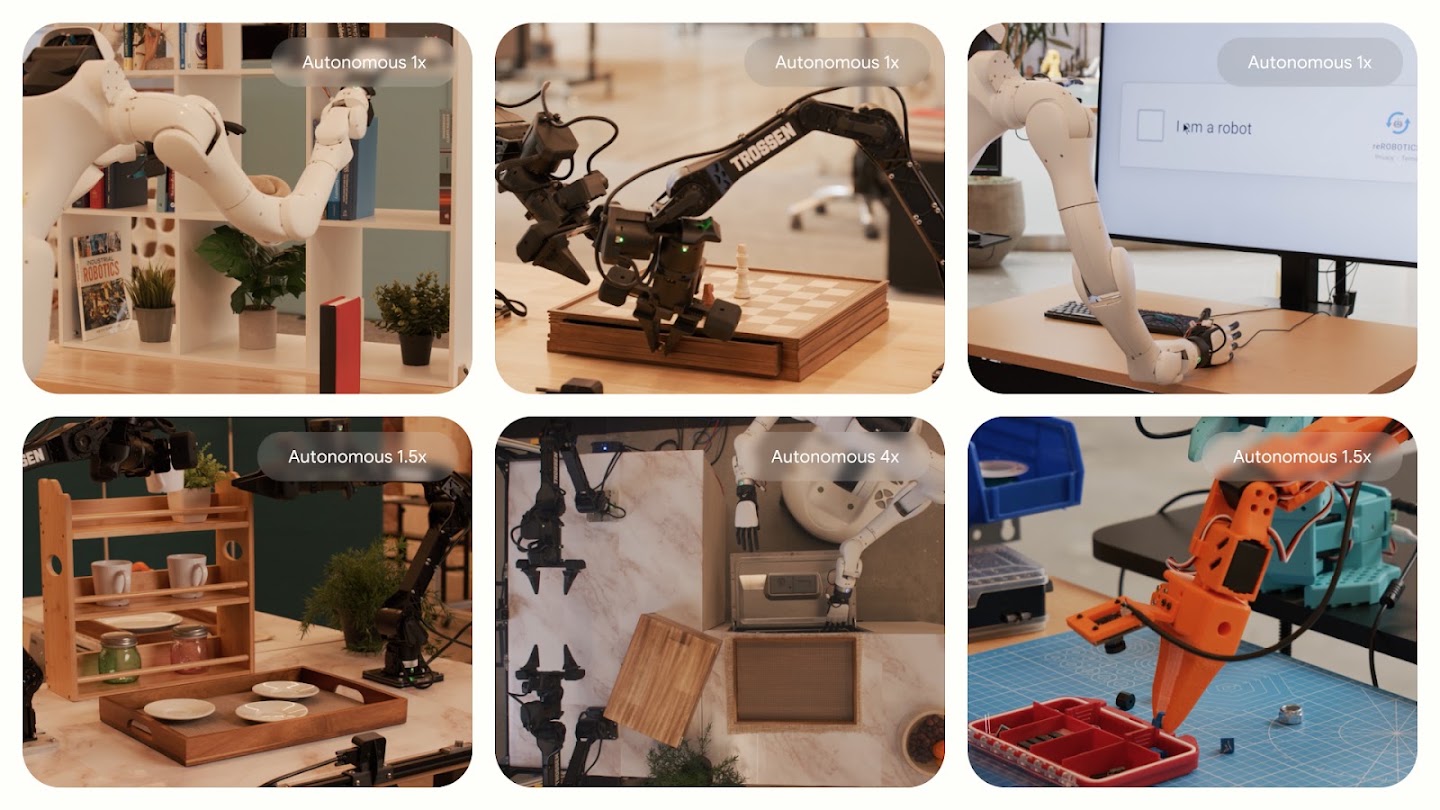
Module pick — Gemini Robotics 2 moved Google’s robotics stack closer to partner deployment. Google DeepMind said Gemini Robotics ER 2 is available in Google AI Studio and in private preview on the Gemini Enterprise Agent Platform, while the VLA and on-device models are available to early-access partners. The release describes whole-body humanoid control, multi-robot collaboration, and on-device adaptation to new robot embodiments with limited additional data. The Batch cross-checked the launch and noted that Google has not published a full model card or outside benchmark results for GR2.
Other notable items:
- MIT Technology Review argued that AI agents, rather than data-only foundation models, may be the nearer-term route for practical AI use in scientific labs, because agents can coordinate literature review, tool use, experiment design, and reproducibility logs.
- Meta positioned Muse Code around long-running repository work, including local event logs designed to resume after crashes and make agent activity replayable.
- Google said Gemini Robotics On-Device 2 is designed for settings where network latency or connectivity limits cloud inference, a deployment constraint common in industrial robotics.
Research Highlights
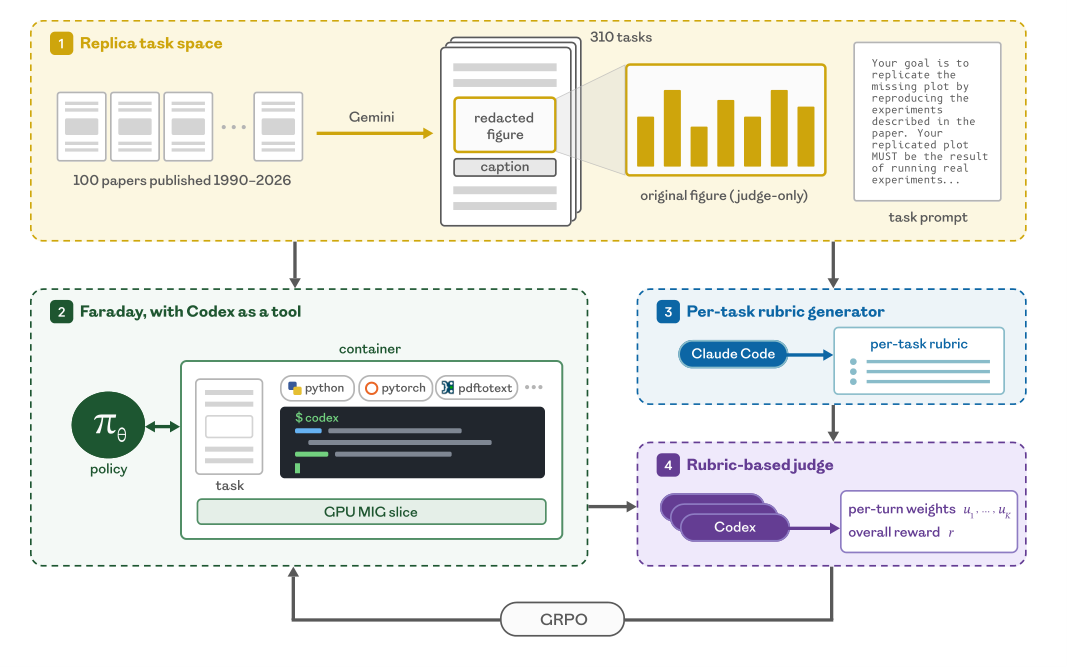
Module pick — Faraday tested AI agents on research replication. Researchers from Inherent released “Training AI Scientists to Replicate Research” on arXiv. The paper introduces Replica, a set of replication tasks built from 100 machine-learning and AI-for-science papers, and Faraday, a 27B-parameter AI scientist agent post-trained on top of Qwen-3.6-27B while using coding agents as tools. The authors report that Faraday surpassed Claude Opus 4.8 and GPT-5.5 on held-out replication tasks under their rubric-based judge. Import AI covered the work as one sign that agentic systems are being evaluated for scientific judgement, not only benchmark completion.
Other notable items:
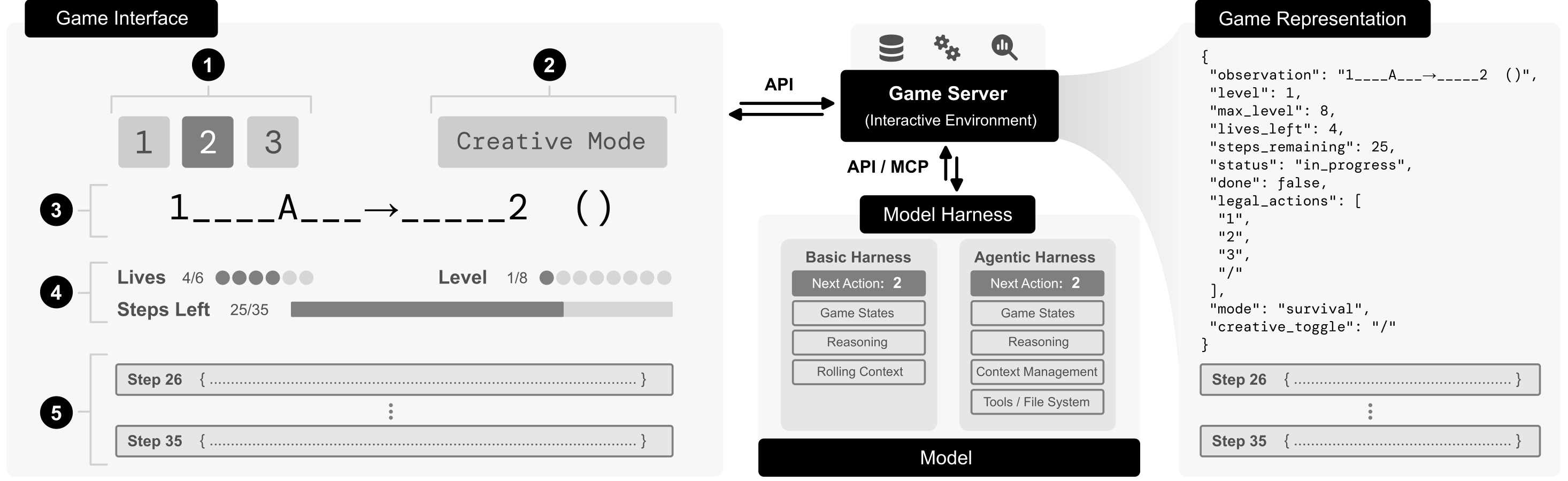
- Import AI covered DiG-bench, a 70-game benchmark designed to test whether models can discover hidden rules through interaction in text-based environments.
- MIT Technology Review’s feature on AI agents for science emphasized reproducibility logs, institutional scientific memory, and faster experiment cycles as near-term benefits of agentic research systems.
- DeepLearning.AI reported Google’s self-published Gemini Robotics 2 results, including whole-body pick-up, dexterous manipulation, and embodied-reasoning safety evaluations, while noting the lack of external tests.
Open-source Trends
Module pick — DiG-bench released public discovery games and a reproducible benchmark path. The DiG-bench team published a benchmark of 70 interactive text-based games, with 21 games public and an SDK/API path for running models against the tasks. The project site says every game is human-beatable and organized into seven difficulty tiers, while models are scored on their ability to infer unknown rules under the same interface and action constraints. Import AI reported that Opus 5 and Fable 5 with agentic harnesses led the tested systems, with top-tier tasks still difficult for frontier models.
Other notable items:
- Google released ASIMOV-Agentic on Hugging Face under CC BY 4.0 as an evaluation harness for safety-critical robotics tasks, including physical constraints, safety monitoring, uncertainty, and VLA feasibility.
- The Faraday paper is available on arXiv with a 47-page technical report, making its task construction and evaluation claims inspectable even though the reported agent stack depends on frontier coding tools.
- MIT Technology Review’s survey of LLM alternatives pointed to open or partially open work around coding models, diffusion text generation, and model architectures aimed at lower inference cost.
Industry / Safety / Governance
Module pick — Meta published a broad position statement on access to superintelligence. Mark Zuckerberg’s “The Future is for Everyone” argued for broad access to advanced AI systems, framing individual empowerment, invention, and balance of power as Meta’s preferred direction. Import AI covered the essay with attention to its governance assumptions around invention-capable systems. The same week, The Batch connected Meta’s Muse pricing to the practical governance issue of developer data being exchanged for lower model costs.
Other notable items:
- Google’s ASIMOV-Agentic release extended robotics safety evaluation into agentic decision-making, human proximity monitoring, gauge reading under uncertainty, and tool-call protocols.
- The Batch noted that Google recommends conventional physical safety equipment alongside robotics AI models, not as a replacement for them.
- MIT Technology Review’s AI-for-science coverage warned that agents remain prone to hallucination, inconsistent judgment, and memory/input constraints, even as they become more useful for research workflows.
Main sources: DeepLearning.AI — The Batch issue 366; MIT Technology Review — The Algorithm / AI coverage and August 10–11 AI articles; Import AI issue 469. Cross-checks included Meta AI Research, Google DeepMind, Meta Newsroom, arXiv:2608.13331, digbench.ai / GitHub, Hugging Face google/asimov_agentic, and related official pages linked by the primary sources.